What to sell: how to pick a product to sell from home, at markets or on WhatsApp
Product ideas to start selling, what to watch out for with each, and four filters to pick yours before you spend money on stock.
 Arca9 min readUpdated
Almost every home business starts with the same question: what should I sell? A list of ideas helps, but what really decides whether an idea works is whether it leaves you a profit, whether it sells quickly, and whether you can store it and deliver it without headaches. Here are ideas by category, and then how to choose yours.
Product ideas to sell
- Clothing and accessories. Sells year-round and does very well on WhatsApp and at markets. Watch your sizes: the mediums sell out and you're left holding the larges.
- Jewelry and costume jewelry. Takes up little space, ships easily and has good margins. It needs good photos, because people buy what they can see.
- Beauty and personal care. Products people buy again, which brings customers back. Keep an eye on expiry dates.
- Direct-sales catalogs. You start without buying much stock, because you only order what customers ask for. Your profit is the discount the company gives you, so do the math on shipping carefully.
- Food, desserts and sweets. Sells fast and people come back. It means working to order and checking your local rules for selling food.
- Handmade goods. Candles, soaps, knitwear, pottery. Different from what's in any store, but count your hours honestly when you set the price.
- Gifts and stationery. Move a lot in season: back to school, Mother's Day, Christmas.
- Plants and planters. Good for markets and local sales. Harder to ship.
What to sell at a market or bazaar
If the question is what to sell at a market, the short answer is: things people decide on the spot, pay for in cash and carry away. At a market nobody arrives looking for something; they walk by, see it and buy if they like it and the price doesn't make them think. That's why these work best:
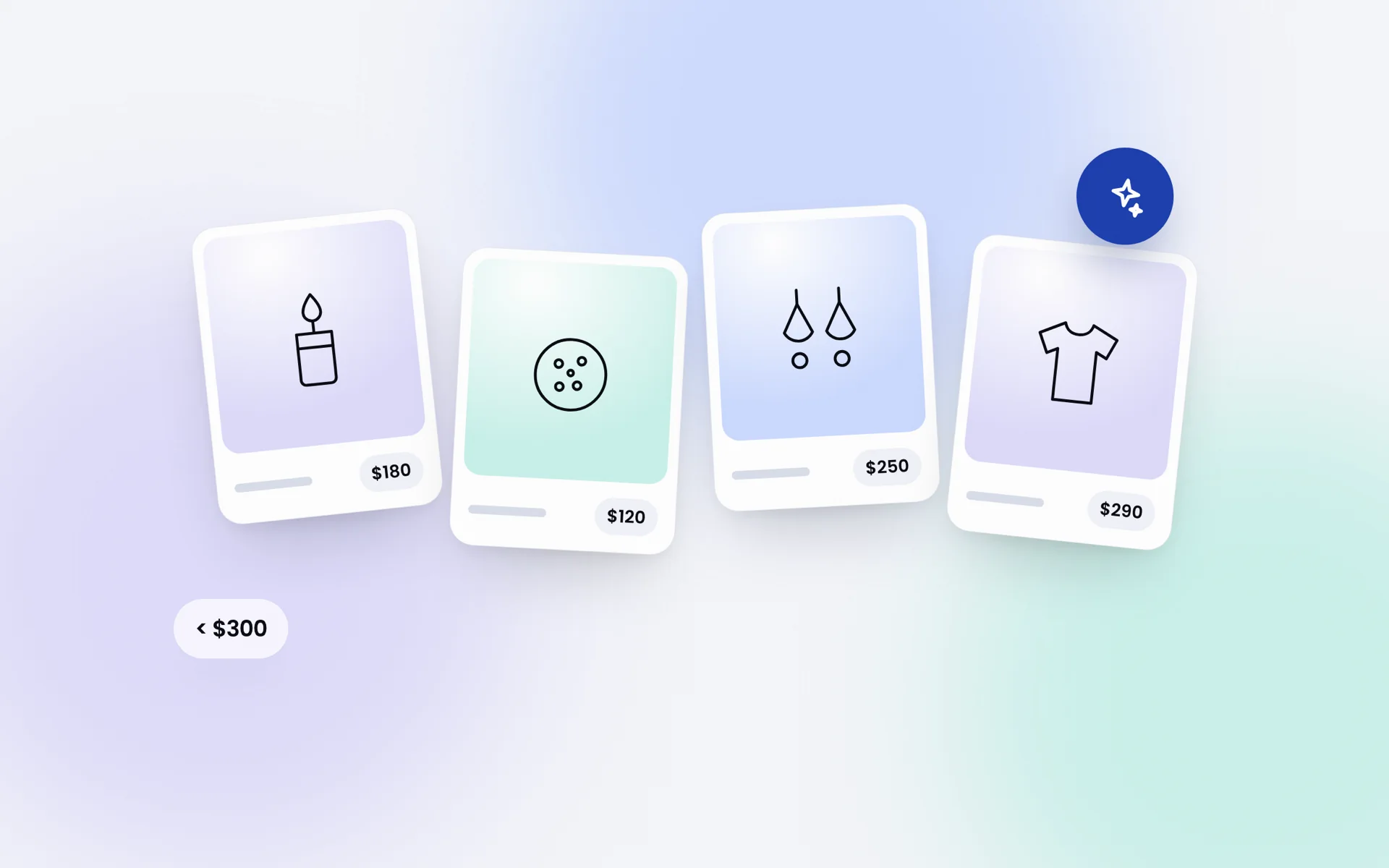
- Anything under about $300. That's the price people decide on without asking anyone. Above it, they think about it and come back “later”, and later never comes.
- Anything you can see from a distance. Clothes on a rack, earrings on a display, candles and soaps you can smell. What's in a box doesn't sell.
- Anything you can try or smell. Food in small portions, creams with a tester, sweets by the piece.
- Seasonal goods. Gifts before Christmas and Mother's Day, things for the home in January, school supplies in August. A Christmas market sells whatever can be given as a gift.
- Things you make. Handmade goods don't compete with the stall next door and give people something to talk about, which at a market is half the sale.
Read: how to sell at a market and keep track of your sales
Four filters for choosing what to sell
Before you buy any stock, run each idea through these four filters. An idea that fails two of them will cost you more work than it pays back.
- Does it leave you a profit? Add up what each piece costs you, shipping, and the card fee if you take cards. If making any money means a price nobody will pay, it isn't your product.
- Does it sell quickly? Money tied up in stock isn't working. What sells in days lets you buy again and grow.
- Is it easy to store and deliver? Anything that breaks, spoils or doesn't fit in your home makes every sale harder.
- Who would buy it from you this week? If you can't name ten actual people, start with a different idea.
Work out the selling price of your product (free)
Test small before you invest
Don't buy three months of stock in one go. Buy a little, sell it, write down what sold and at what price, and use that to decide what to buy next time. Your own sales will tell you more than any list of ideas, this one included.
That means writing down every sale from day one. It doesn't have to be complicated: a spreadsheet template tells you what's selling, how much you made and what's running low.
Where to sell when you're starting out
- WhatsApp, with a catalog and your status. It's where your first customers already are.
- Markets and fairs, so people can see and touch what you sell.
- Social media, to reach people who don't know you yet.
- Your own circle: family, work, neighbors. Your first sales almost always come from there.
Read: how to make a WhatsApp catalog