How to do a stock count without closing the shop
Counting everything on a Sunday with the shutters down is the most expensive way to do it. You can count by zones, in quiet hours and without stopping sales, if you do it in the right order.
 Arca7 min read
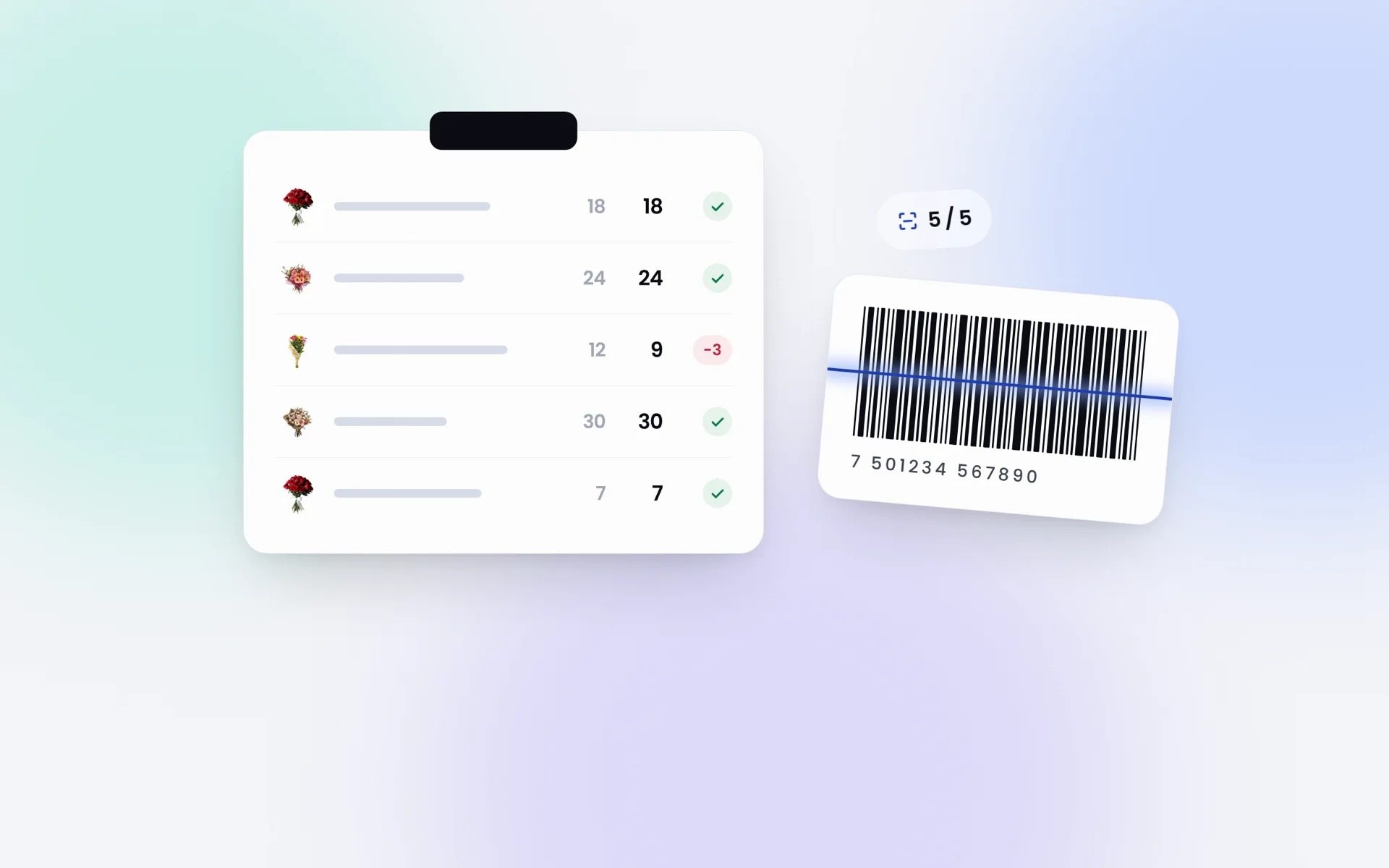
A physical count is the only way to know what you actually have. The system says eighteen; the shelf says fifteen. The missing three went somewhere (theft, shrinkage nobody logged, a sale entered wrong) and until you count, your inventory is just an opinion.
Counting isn't the problem. The problem is that almost everyone does it the worst possible way: on a Sunday, shutters down, everything in one go, with tired people, at eleven at night. That's how you get a bad count, which is worse than no count.
Count by zones, not the whole shop
Split the shop into zones that take twenty or thirty minutes each: one shelf, one display case, one rack. Each zone gets counted completely in one sitting and isn't touched again that day. That's cycle counting, and it has three advantages over a full count:
- You don't stop selling. You count during the quiet morning hour while the counter keeps working.
- You count more often. One zone a day is thirty zones a month: the whole shop, without closing a single Sunday.
- You catch problems while they can still be traced. A discrepancy from three days ago can be investigated; one from eleven months ago can't.
The order that prevents half the mistakes
One. Freeze the zone. While you count that shelf, nothing goes in and nothing comes out. If a piece from the zone has to be sold, note it separately and add it back at the end.
Two. Count blind. Whoever counts must NOT see how many pieces the system expects. It's the most important rule and the one almost nobody follows: the moment you see «18» on the screen, you count eighteen. Your brain fills in the gap. Count first, compare later.
Three. Write down what you counted, not the difference. You write «15», not «3 missing». The system works out the difference. If you do the subtraction yourself, every one is a chance to get it wrong.
Four. Recount what doesn't match, and only that. If three out of thirty products are off, count those three again, ideally with a different person. Half of all discrepancies disappear on the recount: they were counting errors, not inventory errors.
Five. Adjust with a reason. Whatever survives the recount gets adjusted, and the adjustment says why: count, shrinkage, breakage, theft. An adjustment without a reason is a number that won't help anyone six months from now.
What to do about discrepancies
A discrepancy isn't a thief. Before you think the worst, check the four causes behind nearly all of them: a sale entered under the wrong SKU (two similar variants), a delivery that was never recorded, a return that went back on the shelf without being entered, and a wrong unit of measure (a box of twelve counted as one piece).
If the difference is still there after that, it's real shrinkage. Record it as exactly that, with its cost. Shrinkage you can measure is shrinkage you can reduce: a shop that knows it loses $4,000 a month in one category is a shop that can decide to move that category behind the counter.
And get it on the record
A count that leaves no trail is useful for today and nothing more. What makes counting work for you is the series: the same zone counted every month, with its discrepancies, tells you whether the problem is growing or whether what you did worked.
In Arca you enter the count by location and the app works out the difference against what should be there, piece by piece. The adjustment is written into the stock ledger with its reason, its date and the name of whoever made it, and it can't be edited or deleted afterward.
Download the free inventory template, with a stock count sheet
Read: how to keep track of your business's inventory
Read: what a kardex is and why nobody should be able to erase it