How to sell at a market and keep track of your sales
What to prepare beforehand, how to take payments and log sales during the day, and how to tell at the end whether the market made you money or just kept you busy. With a free template and tips for holiday markets.
 Arca8 min read
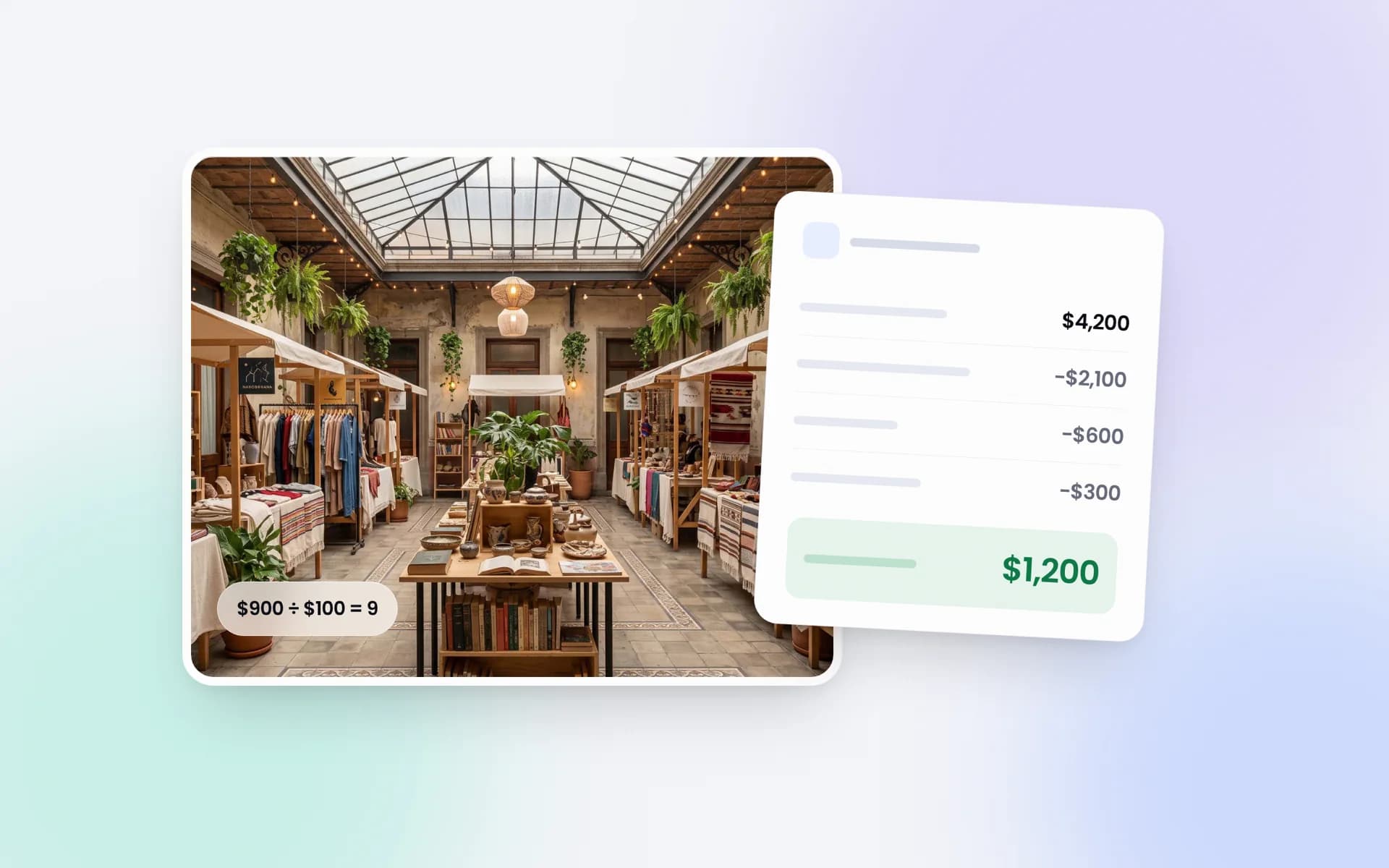
A market (a bazar, as they're called in Mexico: weekend pop-ups, makers' fairs, holiday markets) can be your best sales day of the month, or a whole afternoon on your feet that sends you home with less money than you came with. The difference is rarely how much you sold. It comes down to three things: what it cost you to be there, whether you brought the right stock, and whether you logged every sale so you know what happened.
This guide follows the order things happen in: what to prepare beforehand, what to do during the day, and the numbers worth running at the end. It works the same for a weekend market, an entrepreneurs' fair or a holiday market.
Before the market: check whether it's worth it
Before you pay for a spot, work out how much you'd need to sell just to cover the cost of being there. Add up the stall fee, transport, food for the day and anything you buy for the stall (tablecloth, displays, bags).
Then divide that total by what you make, on average, per piece. If the market costs you $900 and each piece leaves you $100 after what it cost you, you need to sell nine pieces just to break even. From the tenth on, you're making money. If nine pieces sounds like a lot for that market, it may not be the one for you.
What to bring: the stall checklist
- Your stock, counted. Write down how many of each item you're taking before you leave. It's the only way to know at the end what you sold.
- Visible prices. Tag each product or put up a sign per group. People who have to ask the price often don't ask; they walk away.
- Change. Small bills and coins. Without change you lose sales to people carrying only $500 bills.
- A way to take non-cash payments. A card reader, bank transfer or a QR code. More and more people don't carry cash.
- Bags or packaging.
- Something to log sales in. A notebook, your phone or an app. More on that below.
- Business cards or your Instagram on display, so people who don't buy today can find you later.
How to price what you sell at a market
The most common mistake is pricing by eye or copying the stall next door. Start with what each piece cost you, add what you want to make, and check that the total also covers your share of the market costs.
Leave a little room to negotiate if you know people haggle at that market, and decide your minimum price for each item ahead of time. Deciding it with the customer standing in front of you almost always ends in selling below what it cost you.
During the day: log every sale as it happens
At a market, sales come in bursts: five people at once, someone asking a question, someone else paying by transfer. If you leave the logging for that night, you'll forget half of it. Write each one down the moment you're paid, with the bare minimum:
- What you sold and how many.
- The price, including any discount.
- How you were paid: cash, card or transfer.
Keeping track of how you were paid is what lets everything reconcile at the end: you count the cash in the cash box, check the card reader's report for card payments and look at your bank for transfers.
At the end of the day: did the market make you money?
Count your stock again and compare it with what you brought: the difference is what you sold, and it should match what you logged. Then run the full numbers, like this:
| Item | Example |
|---|---|
| What you sold | $4,200 |
| What that stock cost you | −$2,100 |
| Profit on sales | $2,100 |
| Stall fee | −$600 |
| Transport and food | −$300 |
| What you really made | $1,200 |
In the example, selling $4,200 sounds like a great day, but what you actually kept was $1,200. That's the number to compare between markets when you decide which one to go back to.
Also note what sold and what didn't. Whatever was gone by noon is what you need more of next time; whatever came home untouched may not be right for that crowd.
If you're doing a holiday market
Holiday markets run from November to mid-December and usually draw the biggest crowds of the year. They're also the most expensive and the most competitive. Three things change:
- Book your spot early. The good ones fill up by October.
- Think gifts. People are shopping for others: products that can be wrapped, prices that are easy to round, and options at different price points.
- Bring more of your best sellers and less variety. In high season, running out of what people want is worse than taking extra pieces home.
Five common mistakes when selling at a market
- Not counting stock before you leave. Without that number there's no way to know what you sold.
- Leaving the stall fee out of the math. It's the biggest cost of the day and the first one people forget.
- Logging sales at the end. Memory always comes up short.
- No change and no way to take cards. Everyone who walks away because they can't pay is a lost sale.
- Deciding discounts on the spot. It ends in selling below cost.
When you sell at several markets and on WhatsApp too
Once you're doing a market every weekend and selling on social media as well, a notebook or a spreadsheet gets hard to keep current. With Arca you record each sale from your phone's browser right at the stall, using the camera as a barcode scanner, and your stock goes down on its own. At the end of the day you know what's left without counting again.
Download the free sales tracking template